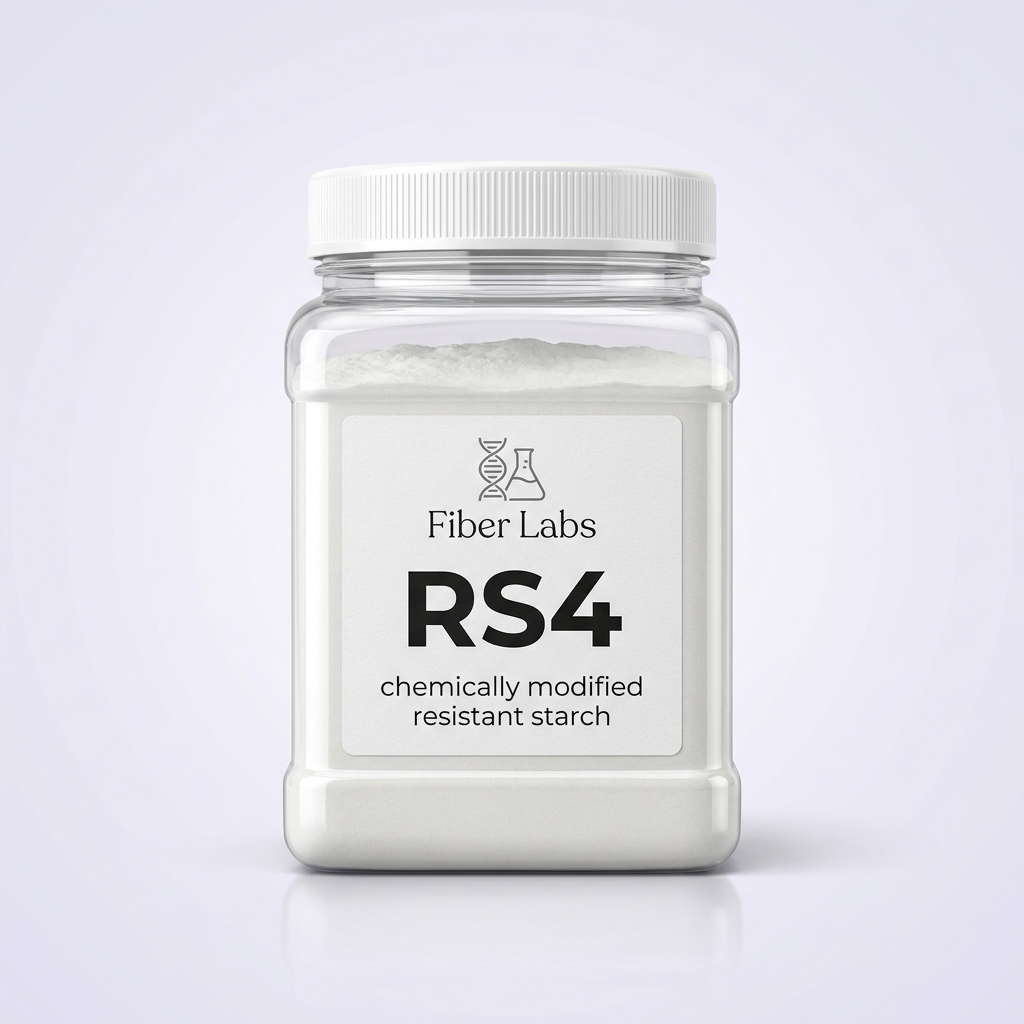
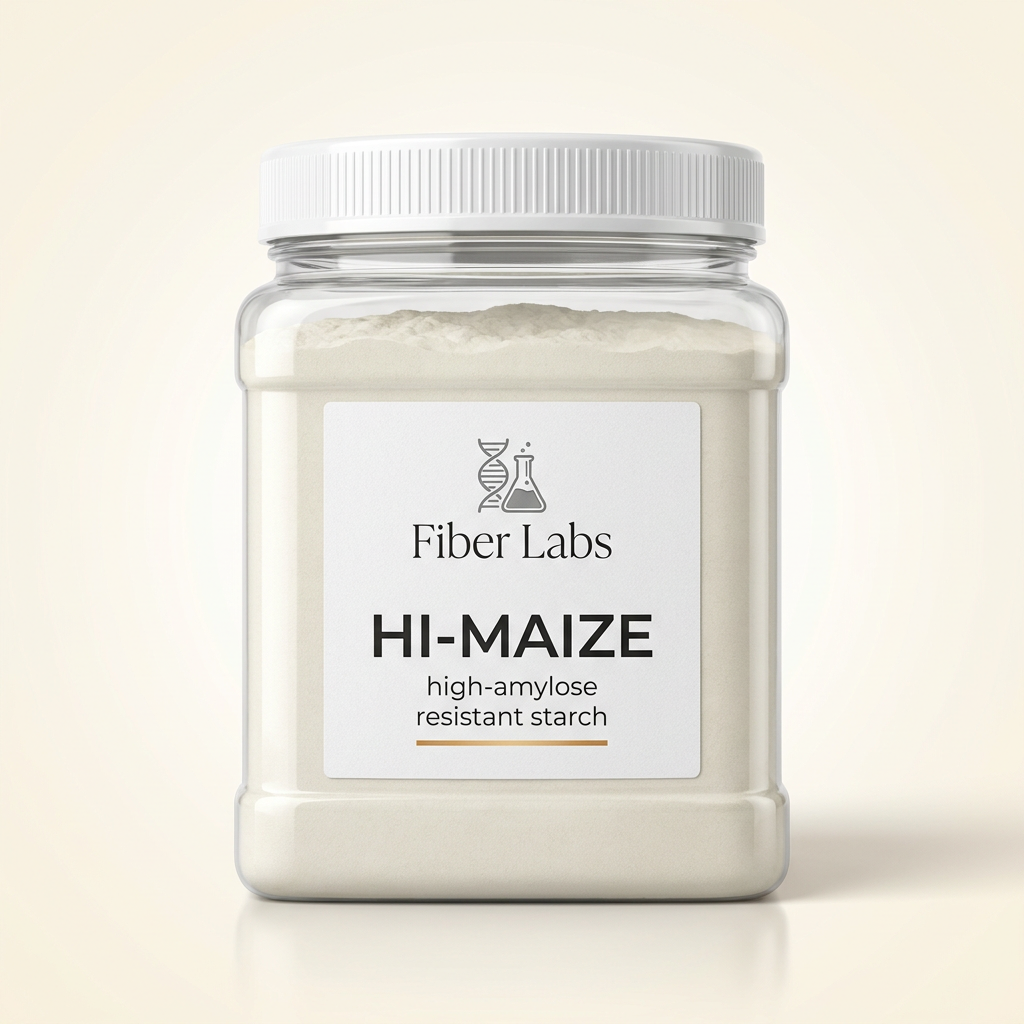
Fiber Labs sources and vets rare gut fibers, then brings them to you. First on the shelf: RS4 — a resistant starch the FDA lets you count as dietary fiber, and virtually tasteless.
We don’t sell a wall of SKUs. Each fiber is vetted before it earns a spot — here’s what’s available now, and what’s next.

Cross-linked, phosphorylated type-4 resistant starch. It slips past digestion and feeds your gut bacteria in the colon. Unflavored, heat-stable, stir it into anything.

A naturally granular, high-amylose maize resistant starch — a different fermentation profile from RS4. We’re finalizing a source that meets our standard.
Buy it now and start your health journey. We wish your microbiome the best.
Resistant starch resists digestion in your small intestine — so it reaches the colon, where your microbiome takes over.
RS4’s bonds are chemically modified, so your digestive enzymes can’t break it down. It passes through the small intestine intact.
It arrives in the colon, where the trillions of bacteria in your gut treat it as food — which is what makes RS4 a prebiotic fiber.
Gut bacteria ferment it into short-chain fatty acids — acetate, propionate, and butyrate. In the body, butyrate fuels the cells lining the colon.
We don’t hide it — we frame it. RS4 is engineered on purpose, and that’s exactly why it’s consistent, heat-stable, and tasteless every time. No “all-natural” theater.
Fermentation and the exact mix of short-chain fatty acids vary from person to person. See what the research shows →
Resistant starch is an active area of microbiome research. Here’s the headline study on RS4 — read it yourself.
In a small double-blind crossover trial (n=10), cross-linked phosphorylated RS4 — the same class of fiber we source — shifted the fecal microbiome and encouraged the growth of specific bacteria. These are observations from one small study of microbiome composition — not a promise about your body or a claim to treat any condition.
Martínez et al., PLOS ONE, 2010 · Read the study → · Food / dietary fiber. Not evaluated by the FDA; not intended to diagnose, treat, cure, or prevent any disease.